A homeowner in North Port, FL called us after a kitchen outlet stopped working mid-week. Our licensed electrician on-site traced the outage to a faulty GFCI receptacle — and the inspection that followed uncovered several opportunities to bring the home’s electrical system up to current standards, keeping the household running comfortably day after day.
The Problem
The homeowner noticed one kitchen outlet had simply stopped working. Everything else in the kitchen seemed fine, so the issue wasn’t immediately obvious.
“One of my kitchen outlets just stopped working and I couldn’t figure out why.”
A non-working kitchen outlet might seem minor, but kitchens rely on properly protected circuits for countertop appliances, small devices, and everyday cooking — so getting it right matters for the whole household’s morning routine and dinner prep.
Investigation
Our field team started at the outlet and worked back toward the source. The kitchen’s GFCI receptacle — the outlet with the TEST and RESET buttons — had failed internally. When a GFCI goes faulty, it can cut power to every outlet downstream on that circuit, which explained the dead receptacle.
Panel and Outlet Checks
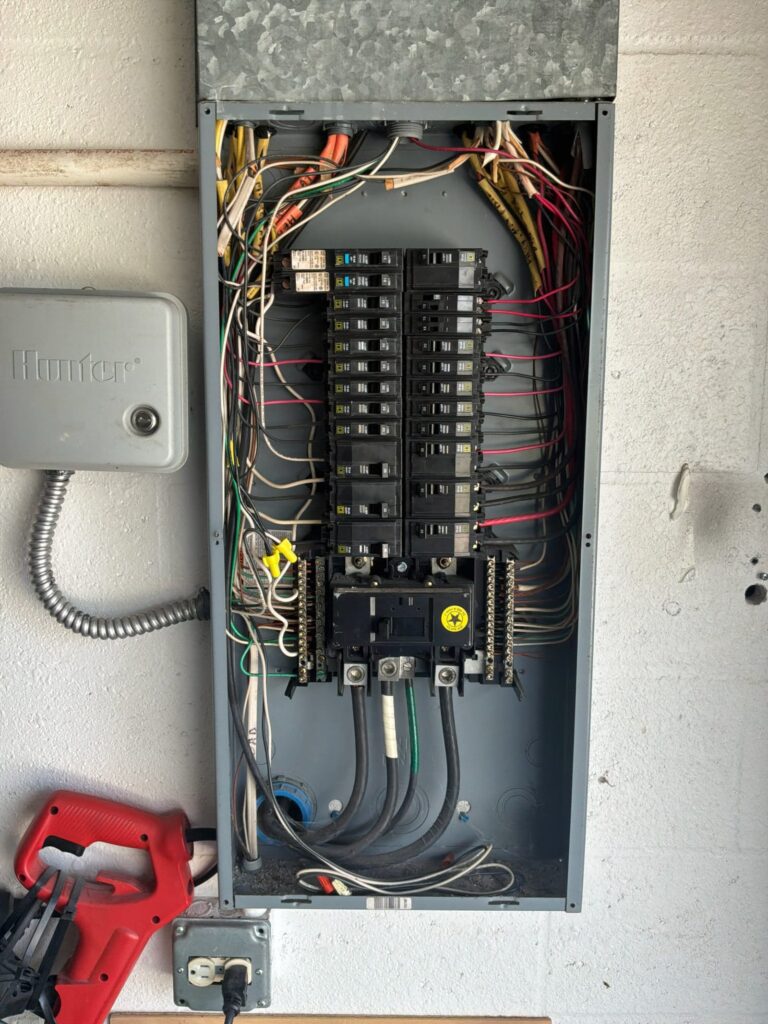
The home runs on a 125-amp Sylvania panel. The panel itself showed clean labeling and properly sized breakers — neutrals and grounds separated, no double-tapped breakers, no open knockouts. Those are solid fundamentals.
However, a few items came up during the inspection that are worth noting:
- Backstabbed connections throughout the home’s outlets and switches. Backstabbing — pushing wires into spring-clip holes on the back of a device rather than securing them under a screw terminal — was a common installation shortcut in homes wired before roughly 2005. Over time, spring tension relaxes, contact resistance climbs, and you get the kind of intermittent behavior that leads to flickering lights or outlets that stop responding. Replacing them with proper screw-terminal connections is a straightforward fix that adds years of reliable service.
- GFCI protection absent in required areas. Per NEC 210.8, GFCI protection is required in kitchens, bathrooms, garages, and outdoor locations. The faulty receptacle was the direct cause of the outage — and it also means the circuit wasn’t providing the protection those areas need.
- No surge protection on the AC disconnect. The central air conditioner had no surge protection at its disconnect. A single voltage spike from a summer storm can stress the compressor’s control board, shortening the unit’s lifespan. A surge protector installed at the disconnect shields that equipment and keeps the AC running reliably through Florida’s lightning season.
- Paint or rust present on the busbar inside the Sylvania panel — a condition worth monitoring, as surface oxidation can eventually affect connection quality.
- Smoke detector coverage and carbon monoxide detector presence were flagged as needing attention — consistent with homes of this era that haven’t had detector updates recently. NFPA 72 guides placement and interconnect requirements for both.
- Tamper-resistant receptacles not present throughout. Per NEC 406.12, all dwelling-unit receptacles should be tamper-resistant — an easy upgrade when outlets are being replaced anyway.
- AFCI protection was partially present but not complete for all required circuits, which predates current NEC 210.12 coverage requirements.
The homeowner declined a full safety check at the time of the visit, so our team focused on documenting findings and presenting options.
What We Fixed
On this visit, our technician on-site investigated the kitchen outlet outage and presented the homeowner with a full picture of what was found. The immediate recommended repair is replacing the faulty kitchen GFCI receptacle to restore power to the affected circuit.
Additionally, the field team recommended:
1. Replacing the GFCI in the kitchen to restore circuit protection and normal outlet function. 2. Installing a surge protector at the AC disconnect to shield the air conditioner’s electronics from voltage spikes — keeping the AC running smoothly through every storm season. 3. Re-deviceing the outlets and switches throughout the home to eliminate backstabbed connections and bring receptacles up to current standards, including tamper-resistant models where required.
Why This Matters for Homeowners
A faulty GFCI is one of the most common reasons a kitchen outlet goes dead — and it’s also one of the most straightforward fixes. Once the GFCI is replaced and the circuit is properly protected again, the kitchen works the way the family expects it to: appliances plugged in where they’re needed, no tripped outlets interrupting the morning routine.
The backstabbed connections found throughout the home are consistent with wiring practices common in homes of this era. They were perfectly acceptable under the code cycle when the home was built. Today’s standards favor screw-terminal connections because they hold up better over the long haul — meaning fewer unexplained outages and outlets that simply keep working, year after year.
Finally, surge protection at the AC disconnect is a small investment that pays back in reliability. Florida’s summer storm season sends voltage spikes through the grid regularly. With a surge protector in place at the disconnect, the AC’s control board is shielded — so the family stays comfortable through the heat even when the weather gets dramatic. That’s the kind of quiet, behind-the-scenes protection that lets everyone sleep at night without worrying about the next thunderstorm.
Our team holds Florida electrical contractor license EC13015487, and all work is performed to current NEC 2023 standards.
Code Compliance Cited in This Job
Every fix above maps to a specific section of NEC 2023. Each card links to NFPA’s public NEC index.
GFCI Protection for Personnel
NEC 210.8 requires GFCI protection on receptacles in kitchens, bathrooms, garages, outdoor locations, and other specified areas in dwelling units. The faulty GFCI receptacle in this North Port kitchen had failed internally, cutting power to downstream outlets and leaving the circuit without the required protection. Replacing it restores both function and code-compliant coverage. NFPA reference ›
Replacement Receptacle Requirements
NEC 406.4(D) states that when receptacles are replaced in a dwelling, they must meet current requirements — including GFCI protection where required by NEC 210.8. In this home, replacing the faulty kitchen GFCI presents the opportunity to bring the outlet fully up to current standards, not just restore power. NFPA reference ›
Tamper-Resistant Receptacles
NEC 406.12 requires tamper-resistant receptacles in all dwelling-unit locations. The inspection found that the home’s outlets were not yet tamper-resistant — common in homes wired before this requirement took effect. A whole-home re-device would bring all receptacles into compliance with this standard. NFPA reference ›
AFCI Protection
NEC 210.12 requires arc-fault circuit interrupter protection on branch circuits supplying dwelling-unit outlets in bedrooms, kitchens, living areas, and other specified rooms. The inspection found AFCI coverage was incomplete for this home — a condition that predates the current code cycle and is worth addressing when breaker or outlet work is undertaken. NFPA reference ›
Surge Protective Device at Service
NEC 230.67 now requires a surge protective device (SPD) at the service of dwelling units. This home had no surge protection on the AC disconnect, leaving the air conditioner’s control electronics exposed to voltage transients during Florida’s frequent summer storms. Installing an SPD at the disconnect addresses this gap and extends the reliable service life of the equipment. NFPA reference ›
Terminal Connections
NEC 110.14(B) requires that connections be made with properly listed means — screw terminals, not the spring-clip backstab method found throughout this home’s outlets and switches. Backstabbed connections were common before roughly 2005 but are now understood to be less reliable over time. Re-deviceing to screw-terminal connections brings the home in line with current standards and improves long-term reliability. NFPA reference ›
Common Questions
Questions homeowners ask after seeing this kind of work.
Why does a faulty GFCI cause multiple outlets to stop working?
GFCI receptacles protect not just themselves but also every outlet wired downstream on the same circuit. When the GFCI device fails internally — as happened in this North Port kitchen — it can cut power to all of those outlets at once, making it look like several things broke at the same time. The fix is usually replacing the faulty GFCI receptacle, which restores the whole circuit. If your kitchen has a cluster of dead outlets, that’s usually the first place to check. Schedule online and we can trace the circuit and get things working again the same day.
What are backstabbed outlets and should I be concerned about them?
Backstabbed connections use a spring-clip hole on the back of the outlet rather than a screw terminal to secure the wire. This was a common shortcut in homes wired before about 2005 — perfectly acceptable under the code in use at the time. Over the years, the spring tension can ease and contact resistance can increase, leading to flickering lights or outlets that stop responding intermittently. Replacing them with screw-terminal connections is a straightforward upgrade that adds long-term reliability to your home’s outlets and switches. Book a walk-through to find out how many outlets in your home may benefit from this update.
How does a surge protector on the AC disconnect protect my air conditioner?
Florida’s summer storms send voltage spikes through the power grid regularly, and your air conditioner’s control board is one of the more sensitive components in the home. A surge protector installed directly at the AC disconnect absorbs those transients before they reach the equipment, keeping the unit running smoothly through every storm season. It’s a small addition that can meaningfully extend the life of the compressor and control electronics. Schedule an appointment and our team can add disconnect-level surge protection in a single visit.
How often should I have my home’s electrical system inspected?
A yearly inspection is a solid baseline for most homes — once a year gives a licensed electrician the chance to catch small issues before they grow into larger repairs. Homes built before 1990, and homes that have come through a recent storm season, often benefit from inspections more frequently. An annual check is also a good way to stay ahead of code updates and keep the household’s everyday routines running without interruption. Schedule your yearly inspection online to get on the calendar.
My Sylvania panel is older — does that mean it needs to be replaced?
Not necessarily. Sylvania panels from certain eras do warrant a closer look, particularly if the breakers are no longer properly listed or if there is visible corrosion on the busbar — both of which were noted in this inspection. A licensed electrician can evaluate the panel’s current condition, check breaker listings, and let you know whether the panel has the capacity and reliability your household needs today. Book an inspection and we can give you a straightforward assessment with no pressure.