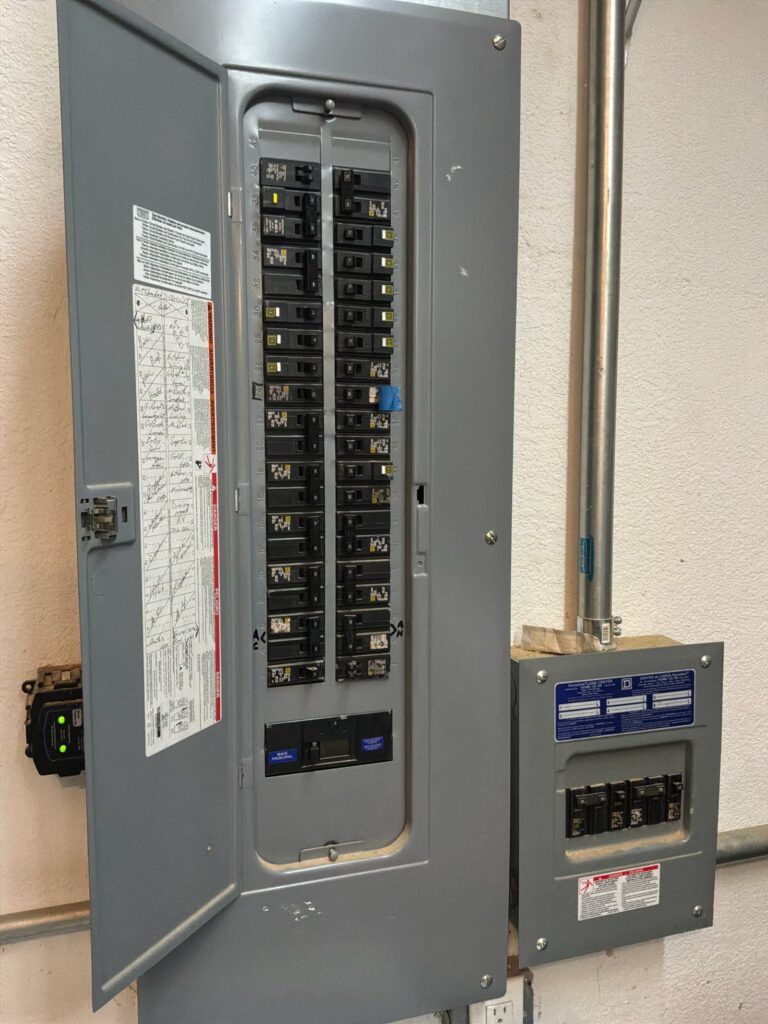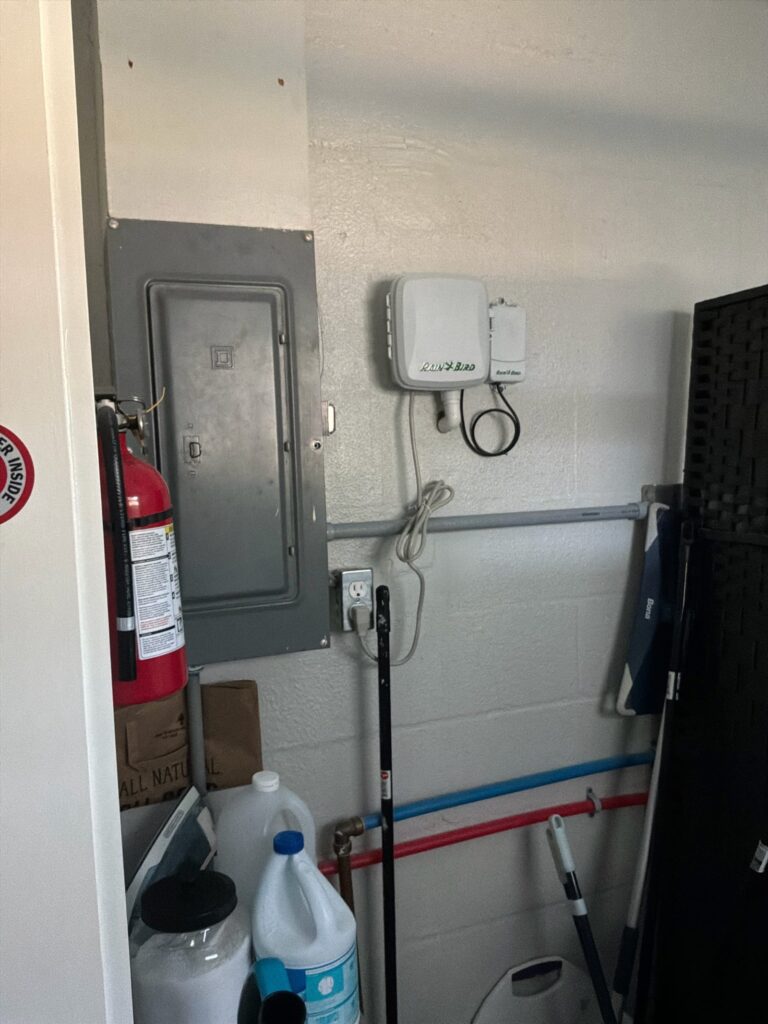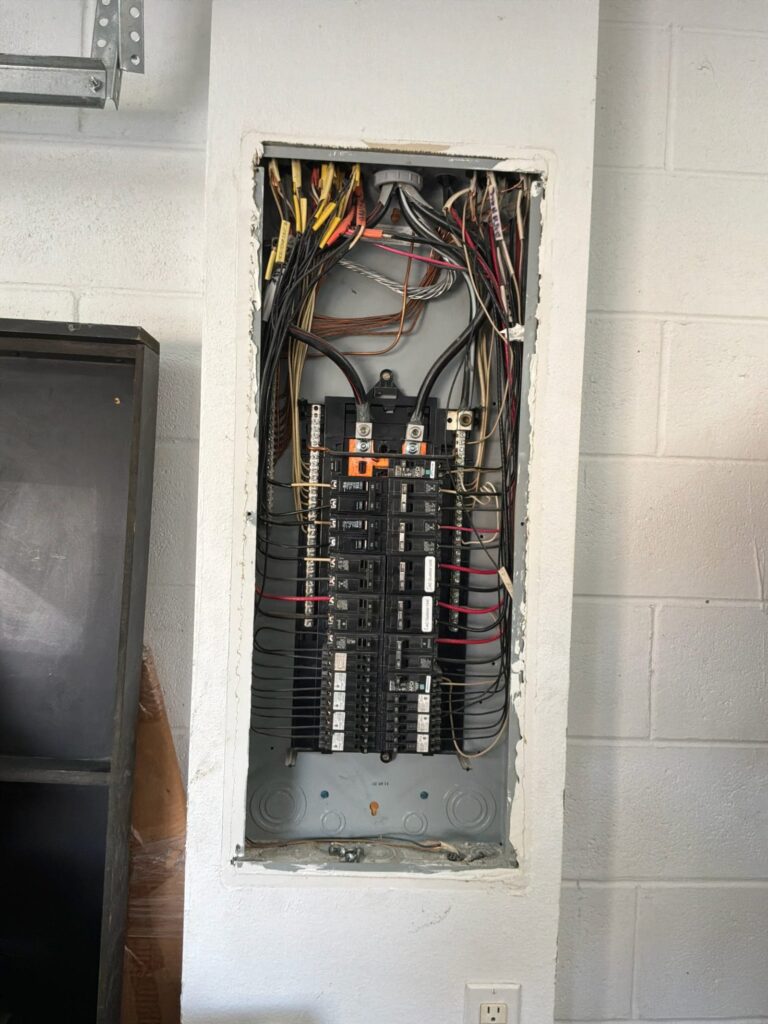
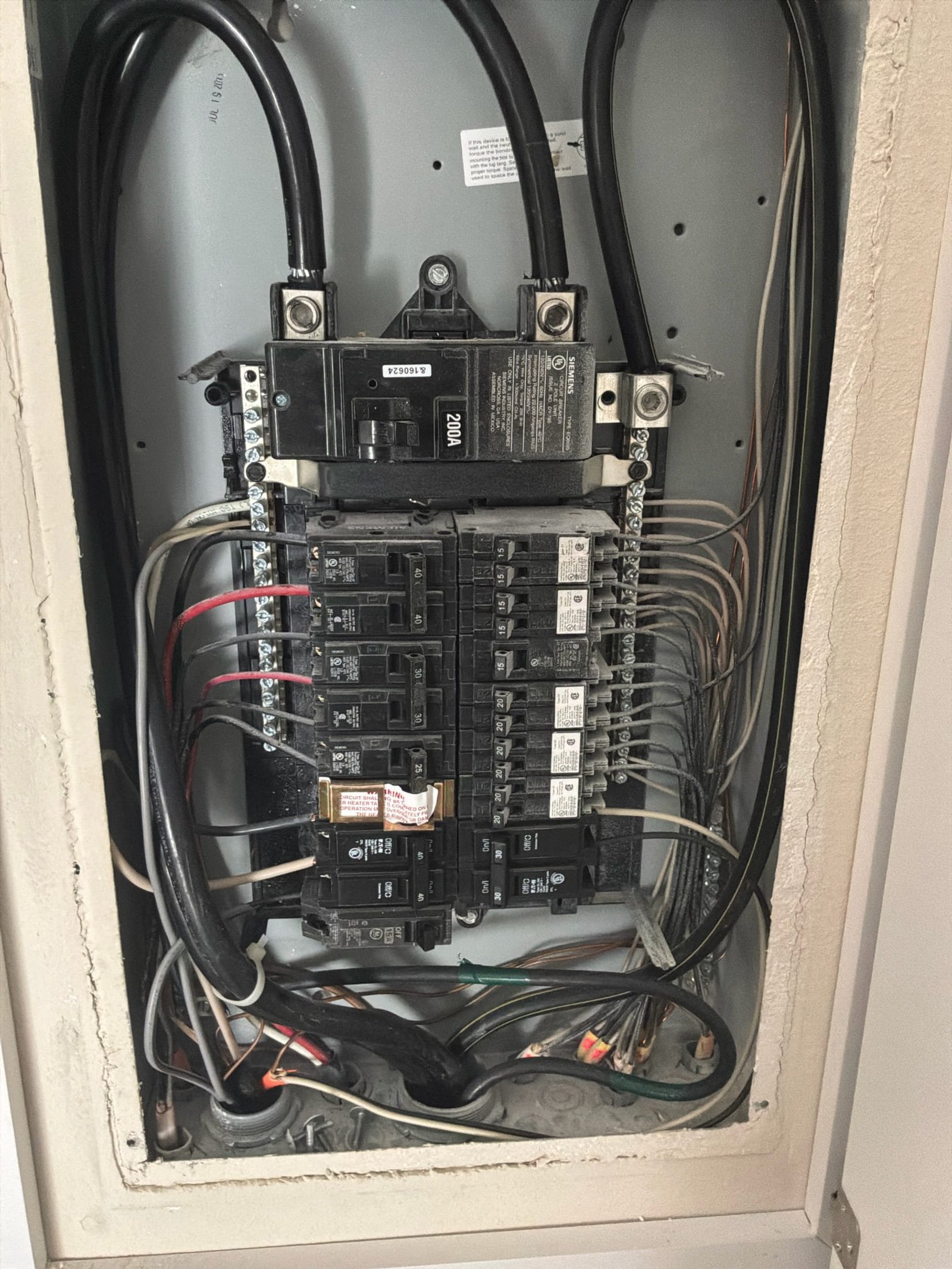
A homeowner in North Fort Myers, FL reached out wanting a whole-house surge protector installed. What started as a single-item request turned into a comprehensive safety inspection — and by the end of the visit, the home was running with modern surge protection, five new interconnected smart smoke and CO detectors, updated breakers, a properly seated bathroom outlet, and several other improvements that bring the system in line with today’s standards.
The Problem
The homeowner had one clear goal: protect the home’s electronics and appliances from power surges. Florida’s lightning season makes surge protection one of the most practical upgrades any homeowner can make. Once our field team arrived, they offered a full visual safety inspection alongside the surge protector installation — and the findings gave the household some valuable peace of mind.
“I wanted surge protection, but I also didn’t know what else might need attention. Turns out, there was more to look at than I expected.”
Investigation
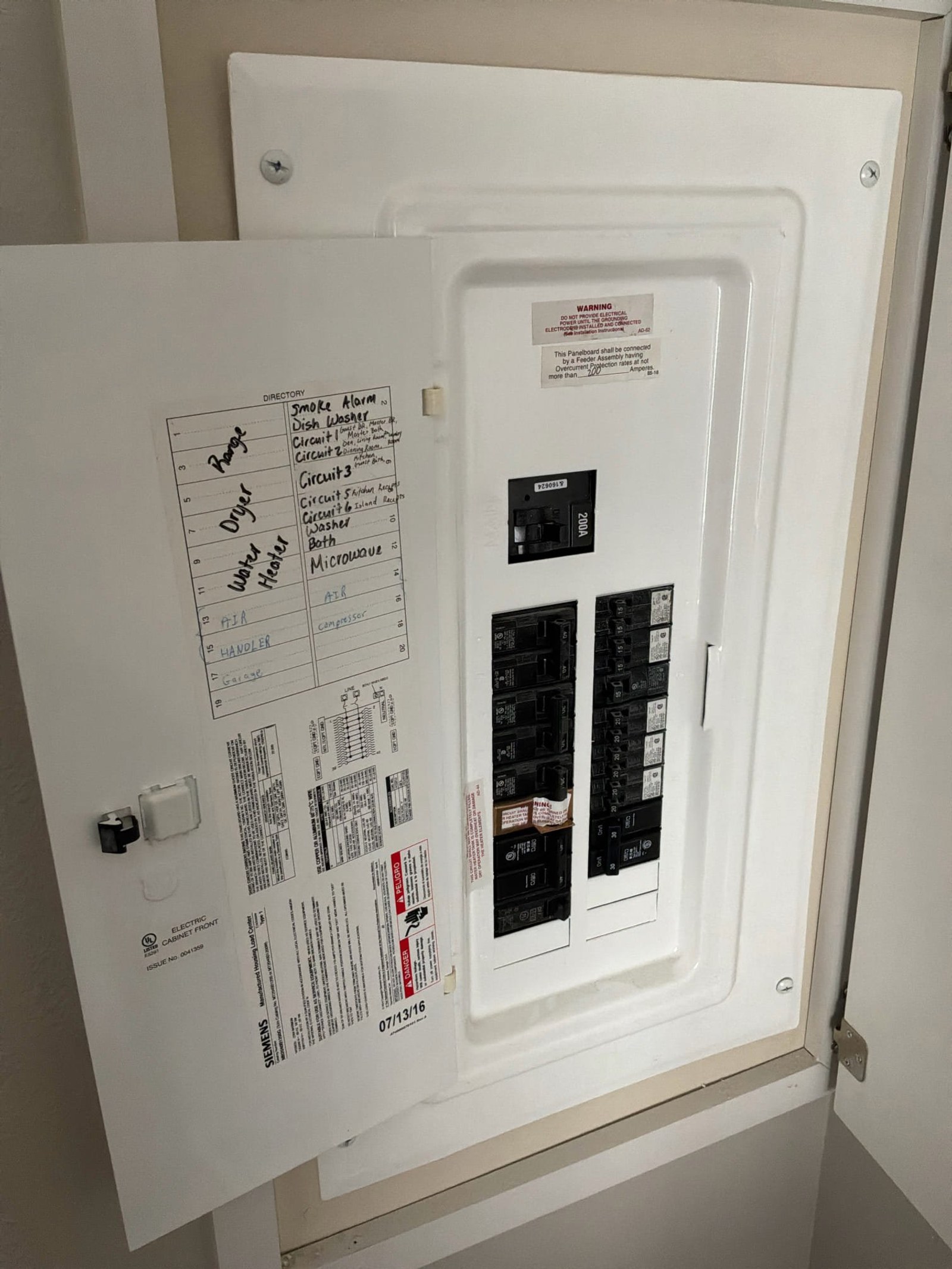
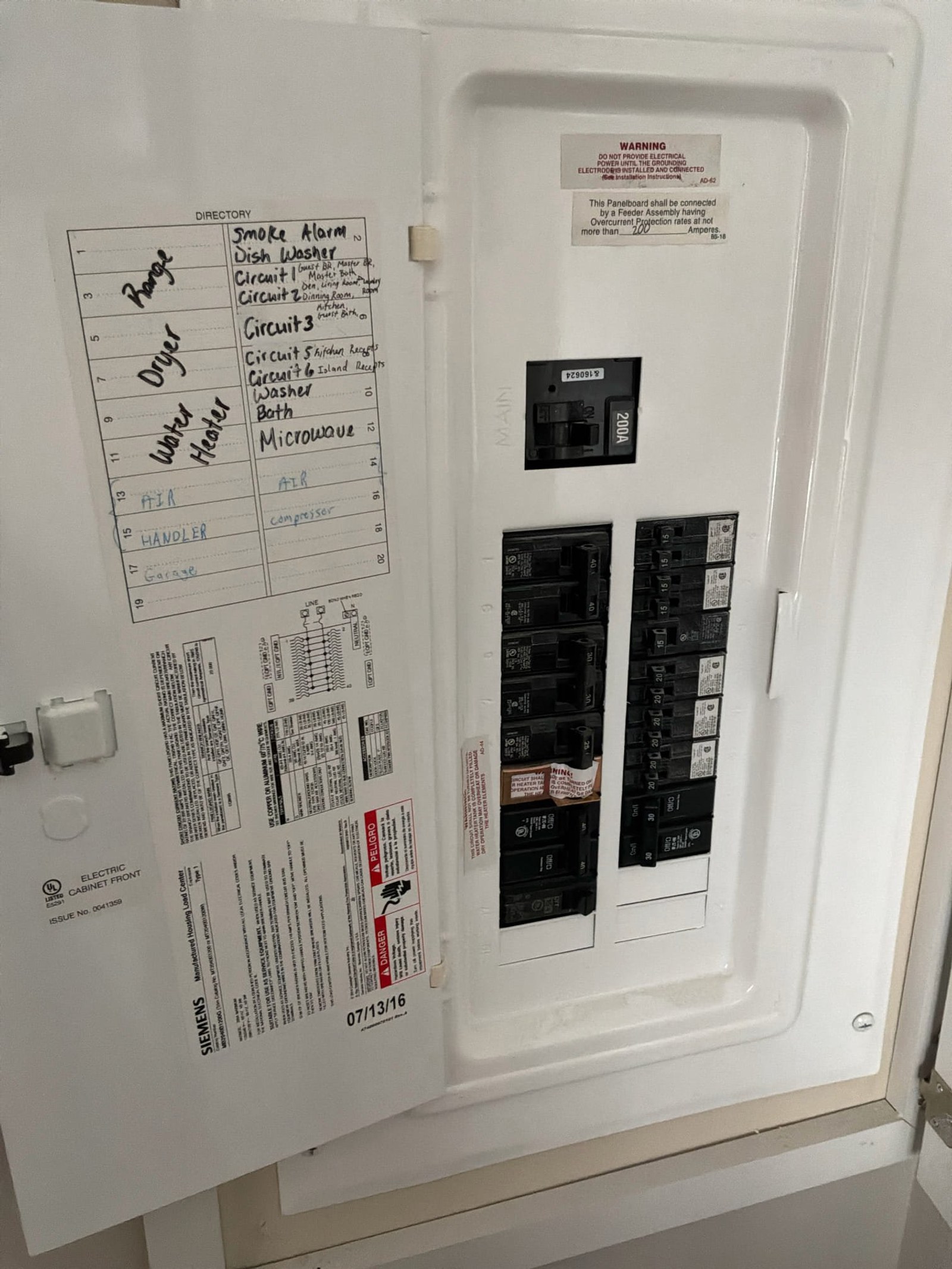
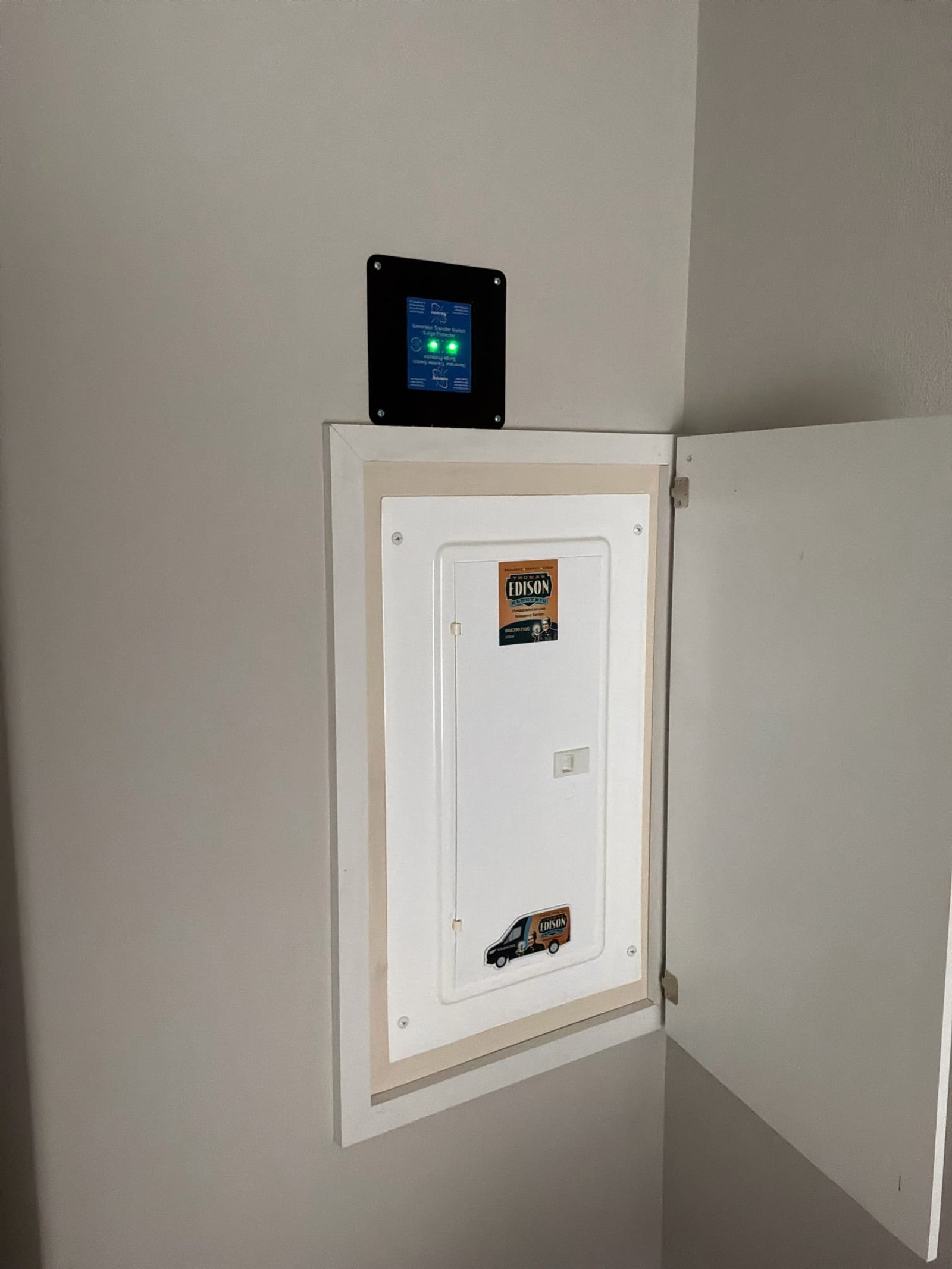
Our technician on-site worked through the GE 150-amp panel and the home’s circuits methodically. Several findings stood out.
Panel and Breaker Conditions
The GE 150-amp panel itself was in reasonable shape — neutrals and grounds separated, no double-tapped breakers, and the directory labeled correctly. However, the panel was missing a 2-inch bushing at one of the conduit entries, and some wires entered without proper strain-relief connectors. The inspection also flagged the absence of AFCI breakers on branch circuits that current code now recommends protecting. Additionally, two breakers needed replacement: a Square D HOM115 single-pole 15-amp and a Square D HOM240 two-pole 40-amp were added, along with a GE THQP230 two-pole 30-amp breaker.
Grounding System
The grounding system was present and the outlets tested as properly grounded — a good baseline. That said, the overall grounding system predates current NEC recommendations, and the inspection flagged it as an area worth monitoring or upgrading in a future visit. This is consistent with many homes built before grounding standards were tightened under more recent code cycles.
Smoke and CO Detection
Five areas of the home were missing smoke or carbon monoxide detectors that NFPA 72 requires in sleeping areas and common spaces. This is common in older homes where detectors have reached the end of their service life and simply haven’t been replaced yet.
Outlets and Switches
The homeowner had attempted to replace a bathroom outlet on their own and ran into trouble mid-project. The outlet was incomplete and not properly seated in the wall. Our crew installed a new single-gang old-work remodel box, fitted a tamper-resistant 15-amp receptacle, and finished the job cleanly. One decorator-style switch was also replaced at an existing location. Meanwhile, the inspection’s backstab findings — noted in the technician’s initial walk-through — were addressed as part of the broader switch and outlet work.
What We Fixed
Here is a summary of everything completed during this visit:
- PSP Vortex 120 kA Whole-House Surge Protector — installed directly onto the GE 150-amp panel per NEC 230.67 and NEC 285.25. The PSP Vortex is rated for plug-on neutral panels and handles up to 120 kA of surge current.
- Five 10-year sealed lithium smart smoke and CO combination detectors — interconnected so every room in the detector network communicates with every other. If one activates, they all respond.
- Square D HOM115 single-pole 15-amp breaker — installed to replace a worn breaker slot.
- Square D HOM240 two-pole 40-amp breaker — installed for a higher-draw circuit.
- GE THQP230 two-pole 30-amp breaker — installed per circuit requirements.
- Bathroom outlet repair — new single-gang remodel box, tamper-resistant 15-amp receptacle, and cover plate installed cleanly at the existing location.
- Decorator switch replacement — one single-pole 15-amp decorator switch replaced at an existing location.
- NEMA 5-15P cord cap — a 110V 15-amp plug cap installed onto an existing cord at the homeowner’s request.
Why This Matters for Homeowners
Surge protection is one of those upgrades that works quietly in the background — and that’s exactly the point. The PSP Vortex sits inside the panel and intercepts voltage spikes before they reach the refrigerator, AC unit, computers, televisions, and any other connected appliances. For a family in Southwest Florida, where summer afternoons bring routine lightning activity, that layer of protection means the household keeps running the way it should — through every storm, without a second thought.
The five new interconnected smart detectors bring the home into alignment with NFPA 72 requirements for sleeping areas and common spaces. Because they are all linked together, the whole home responds as one unit. That matters especially at night, when the household is asleep and a fast response in any part of the home is what gives a family the time it needs.
Finally, small items like the bathroom outlet — left partially unfinished — are worth completing properly. A receptacle that isn’t fully seated in a properly secured box is simply not doing its job. The fix took less than an hour, and now that outlet works the way the homeowner always expected it to. For a household managing its own small repairs, having a licensed team review the work and bring it across the finish line is exactly the kind of support that makes homeownership feel manageable.
“Jordan was great even with the issues putting box in got it done. remarkable yong man wish him the”
Code Compliance Cited in This Job
Every fix above maps to a specific section of NEC 2023. Each card links to NFPA’s public NEC index.
Surge Protective Device at Service
NEC 230.67 requires a listed surge protective device (SPD) at the service equipment of all new dwelling units. This home had no existing SPD installed. Installing the PSP Vortex 120 kA whole-house surge protector directly onto the GE 150-amp panel brings the home into compliance with this requirement and protects all downstream circuits from transient voltage events. NFPA reference ›
Type 2 SPD Installation Requirements
NEC 285.25 governs how Type 2 surge protective devices are to be connected at the panel. The PSP Vortex was installed as a plug-on neutral device, matching the panel’s configuration and satisfying the connection requirements for a permanently installed Type 2 SPD on this single-phase residential service. NFPA reference ›
AFCI Protection for Dwelling Branch Circuits
NEC 210.12 requires arc-fault circuit interrupter protection on branch circuits supplying outlets in dwelling bedrooms, living rooms, kitchens, and other specified areas. The inspection found that AFCI protection was absent on several branch circuits in this home — a condition consistent with panels wired before AFCI requirements expanded under the 2008 and later NEC code cycles. New Square D HomeLine breakers were installed as part of the panel modernization work. NFPA reference ›
GFCI Protection for Personnel
NEC 210.8 requires GFCI protection at receptacles in bathrooms, kitchens, garages, outdoor locations, and pool or spa equipment areas. The inspection identified a kitchen outlet lacking GFCI protection and the master bathroom outlet that the homeowner had attempted to replace. The bathroom outlet was completed with a properly installed tamper-resistant receptacle seated in a new old-work box. NFPA reference ›
Tamper-Resistant Receptacles in Dwellings
NEC 406.12 requires tamper-resistant receptacles throughout dwelling units. The replacement receptacle installed in the bathroom was specified as a tamper-resistant 15-amp device, satisfying this requirement at the replaced location per NEC 406.4(D), which mandates that replacement receptacles meet current standards. NFPA reference ›
Unused Panel Openings
NEC 408.7 prohibits unused openings in panelboards. The inspection identified a missing 2-inch bushing at a conduit entry point in the GE 150-amp panel. Properly secured and protected wiring entries are required to maintain the panel’s integrity and protect conductors from abrasion at the enclosure edge. NFPA reference ›
Common Questions
Questions homeowners ask after seeing this kind of work.
What does a whole-house surge protector actually protect against?
A whole-house surge protector — like the PSP Vortex installed in this North Fort Myers home — is wired directly into your main electrical panel. It intercepts sudden voltage spikes from external sources, such as nearby lightning strikes or utility switching events, before those spikes can travel to your refrigerator, HVAC system, televisions, or computers. It works alongside, not instead of, individual point-of-use surge strips. If you’d like to add this layer of protection to your home, schedule online and our team can assess your panel’s compatibility the same day.
How often should I have my home’s electrical system inspected?
A yearly inspection is a solid baseline for most households. Homes built before 1990 — and homes that have been through recent storm seasons — often benefit from more frequent check-ins, since older wiring and weather stress can create conditions worth addressing before they become inconveniences. An annual visit gives a licensed electrician the chance to catch small items early, when they are quick and affordable to resolve. Book a safety inspection to get on the calendar.
Why are interconnected smoke and CO detectors better than standalone units?
When detectors are interconnected, triggering one unit causes every detector in the network to sound. That means a detector in a bedroom hallway will respond to an event detected in the garage — even if no one is near the garage unit. NFPA 72 recommends interconnection for this reason. Five new 10-year sealed lithium smart detectors were installed in this home to create exactly that kind of whole-home awareness. If your home’s detectors are more than ten years old or were never interconnected, schedule a detector upgrade to bring your home up to current NFPA 72 recommendations.
What are backstabbed outlets and switches, and why do they matter?
Backstabbed connections were a common installation shortcut used in homes wired before roughly 2005. Instead of wrapping the wire around a screw terminal, the wire is pushed into a spring-loaded hole in the back of the device. Over time, that spring tension eases, contact resistance increases, and you may start to notice intermittent flickers or outlets that feel warm to the touch. Replacing them with screw-terminated connections is a straightforward, durable fix. If your home is the same vintage and you’ve noticed occasional flickering, our team can take a look and let you know what you’re working with.
Do pool and spa circuits require GFCI protection in Florida?
Yes. NEC 210.8 and NEC 680.22 require GFCI protection on receptacles near pools and spa equipment. The inspection at this North Fort Myers home flagged pool equipment circuits that lacked GFCI protection — a condition consistent with older installations that predated expanded pool-circuit requirements. Updating those circuits brings the home in line with current code and ensures the outdoor equipment works reliably through every swim season. Schedule a pool circuit inspection if your home’s pool wiring hasn’t been reviewed recently.