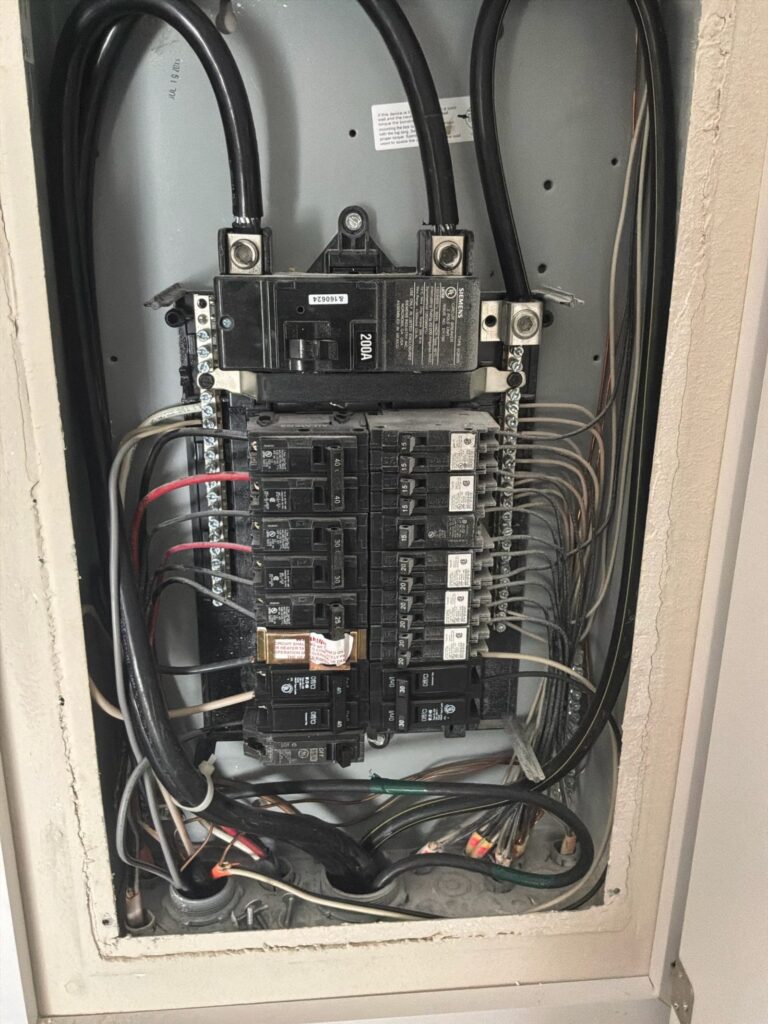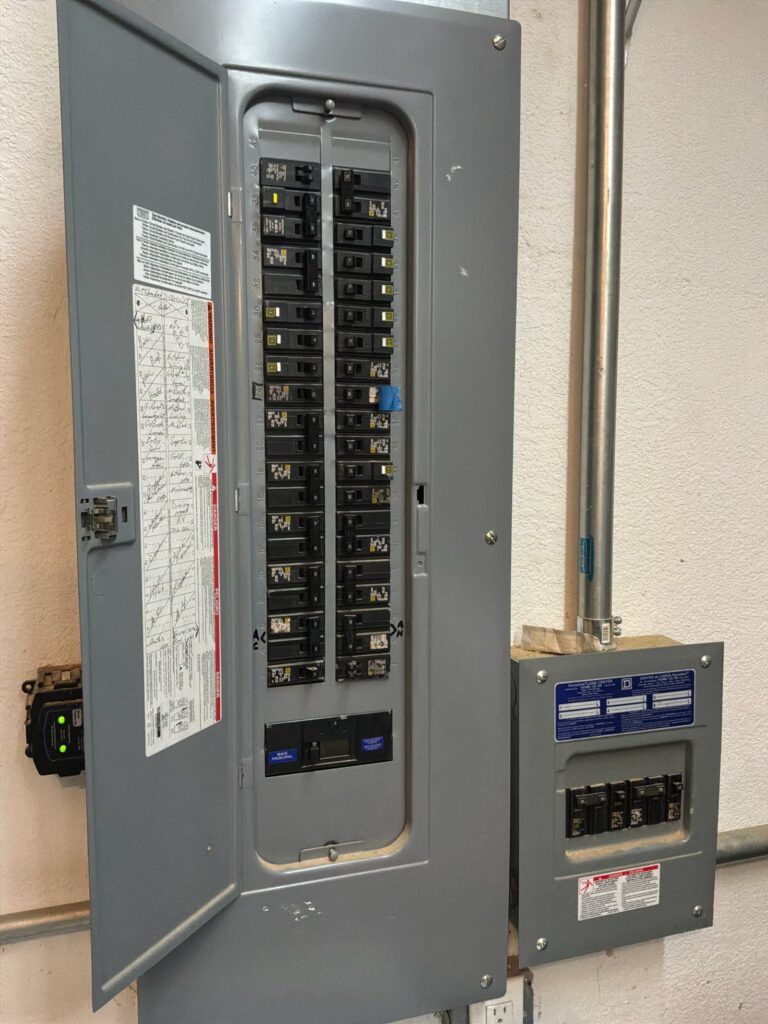
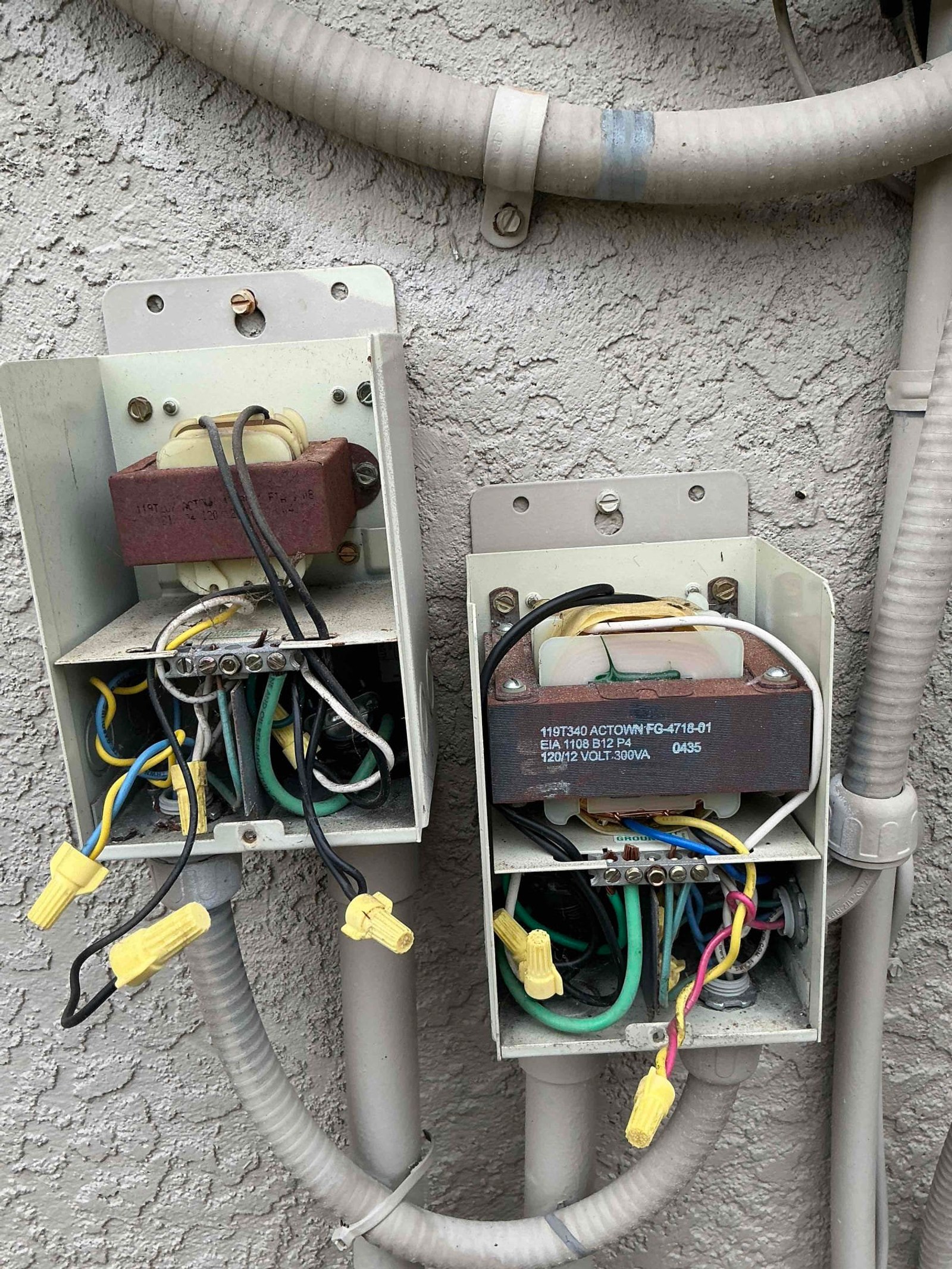
A homeowner in Venice, FL called about a pool light that had stopped working. When our technician arrived, the troubleshooting revealed a much broader story—one common in homes built before the mid-2000s. The pool circuit lacked GFCI protection, and a walkthrough of the home uncovered backstabbed outlets and switches throughout, double-tapped breaker positions, and an outdated grounding system. The homeowner chose to start with the most immediate concern: bringing the outdoor and pool circuits up to current code with proper GFCI protection and weather-resistant covers.
The Problem
The initial call was straightforward: a pool light had gone dark. However, the bigger issue became clear during the investigation. The home had no GFCI protection in any of the required areas—not the pool, not the outdoor outlets, not the kitchen or bathrooms. Additionally, the grounding system was obsolete, and many of the home’s outlets and switches were backstabbed, a wiring shortcut that was common in homes built before about 2005.
Investigation
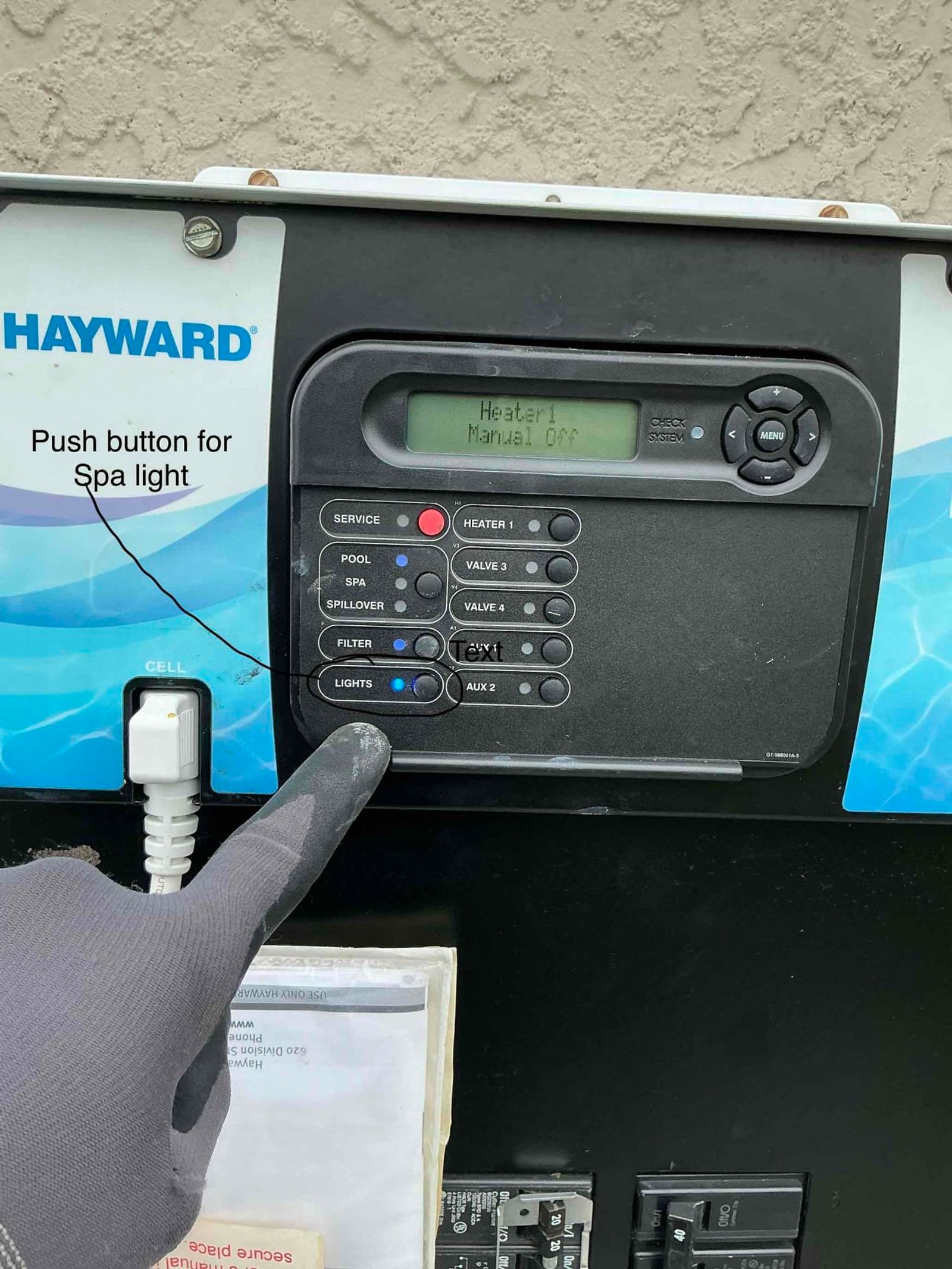
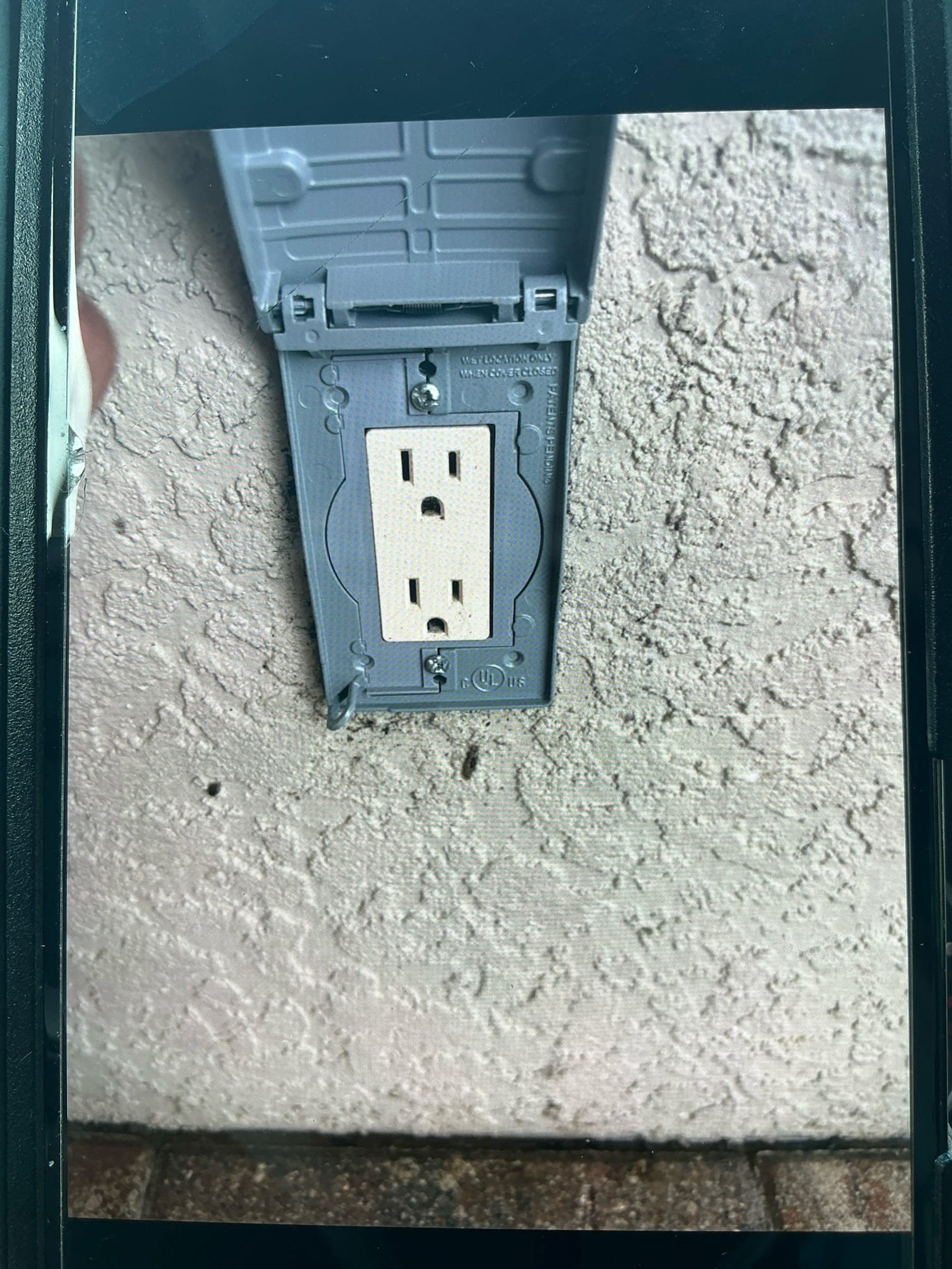
Our field team began with the pool circuit and quickly identified the absence of GFCI protection—a requirement under NEC 680 for any pool-related wiring. The outdoor receptacles near the patio and pool deck also lacked GFCI devices, leaving those circuits vulnerable to ground faults during rain or when wet hands met outlets.
Inside the home, the technician opened several outlet boxes and documented backstabbed connections on both outlets and switches. Backstabbing was a time-saving technique decades ago, but over the years the spring tension eases, contact resistance climbs, and you get the kind of intermittent issues and warm faceplates that concerned the homeowner. Meanwhile, the GE 150A main panel showed double-tapped neutral and ground bus bars—a configuration that no longer meets NEC 408.41 that can lead to loose connections and inconsistent grounding.
The grounding system itself was outdated, predating the current standards for electrode configurations. Additionally, the home had no smoke or carbon monoxide detectors, and no whole-home surge protection.
What We Fixed
The homeowner prioritized the outdoor and pool electrical work. Our crew installed one Pass & Seymour 1597-TRWRW 15A 125V self-test tamper-resistant weather-resistant GFCI receptacle to protect the pool circuit, and added five additional weather-resistant in-use bubble covers (Mulberry 30981) to outdoor receptacles around the property. Each GFCI device was tested on-site to confirm proper trip function and reset behavior.
The tamper-resistant feature on the new GFCI meets NEC 406.12 requirements for outdoor locations accessible to children, and the weather-resistant construction ensures the devices hold up through Florida’s summer storms and humidity. The in-use bubble covers keep the devices dry even when a cord is plugged in—critical for year-round outdoor use.
The work brought the pool and outdoor circuits into compliance with NEC 2023, giving the family a safer, more reliable outdoor electrical system.
Why This Matters for Homeowners
GFCI protection is one of the most effective upgrades you can make for any home with a pool, spa, or outdoor living space. Furthermore, these devices monitor the circuit thousands of times per second, detecting even tiny imbalances between the hot and neutral conductors. If current leaks—through water, a frayed cord, or a fault in the equipment—the GFCI trips in milliseconds, long before anyone feels a shock. For families with kids splashing in the pool or neighbors gathered on the patio, that split-second response keeps summer weekends running smoothly and worry-free.
Backstabbed outlets and switches are another common finding in homes of this era. When the spring tension weakens over time, the connection heats up, the breaker trips intermittently, and outlets stop holding plugs securely. Replacing backstabbed devices with screw-terminated receptacles and switches is a straightforward fix that restores reliability and eliminates those frustrating “why does this outlet keep cutting out?” moments.
If your home was built before 2005 and you’re noticing flickering lights, warm switch plates, or outlets that feel loose, it’s worth having a licensed electrician take a look. What you find may be an opportunity to bring the home up to current standards—quietly, without drama, and with every circuit working the way your household expects it to.
Code Compliance Cited in This Job
Every fix above maps to a specific section of NEC 2023. Each card links to NFPA’s public NEC index.
Pool Equipment GFCI Protection
NEC 680.22 requires GFCI protection for all pool pump motors, underwater lighting, and receptacles within 20 feet of the pool edge. This Venice home’s pool circuit lacked GFCI devices entirely—a common gap in homes built before the mid-1990s. Installing self-test GFCI receptacles brought the pool wiring into compliance with current code. NFPA reference ›
GFCI Protection for Dwelling Units
NEC 210.8 mandates GFCI protection for outdoor receptacles, bathrooms, kitchens, garages, crawl spaces, and several other locations. This home predated many of these requirements. Adding GFCI devices to the outdoor circuits addressed the most immediate exposure and provided a foundation for future kitchen and bath upgrades. NFPA reference ›
Tamper-Resistant Receptacles
NEC 406.12 requires tamper-resistant receptacles in all areas of dwelling units accessible to children. The Pass & Seymour 1597-TRWRW devices we installed include integral tamper-resistant shutters, preventing foreign objects from entering the slots while still allowing normal plug insertion. NFPA reference ›
Grounded Conductor Termination
NEC 408.41 prohibits more than one grounded conductor (neutral) from terminating under a single lug or screw unless the bus bar is specifically listed for multiple conductors. The double-tapped neutral bus bars in this GE panel were inconsistent with this requirement and represented an opportunity for future panel rejuvenation work. NFPA reference ›
Electrical Connections
NEC 110.14 requires all electrical connections to be made with approved methods that ensure good contact and mechanical strength. Backstabbed outlets and switches, while common in homes wired before about 2005, rely on spring tension that degrades over time. Screw-terminated connections provide the durable, low-resistance contact the code envisions. NFPA reference ›
Common Questions
Questions homeowners ask after seeing this kind of work.
How often should I have my pool electrical system inspected?
We recommend a yearly inspection for any pool or spa electrical system—especially in Florida, where salt air, humidity, and daily thunderstorms accelerate wear. An annual check confirms GFCI devices are functioning, bonding connections remain tight, and outdoor enclosures are keeping water out. If your home is older and you’re unsure when the pool wiring was last reviewed, our team can schedule a 30-minute safety inspection so you know exactly where you stand.
What are backstabbed outlets, and why do they matter?
Backstabbed outlets use a spring-clip connection on the back of the device instead of a screw terminal on the side. This was a common time-saving technique in homes built before about 2005, but over the years the spring tension eases and the contact resistance climbs. You’ll notice flickering, warm switch plates, or outlets that feel loose. Replacing them with screw-terminated devices is a quick, durable fix. If this sounds like what you’re seeing at home, schedule an outlet inspection online or call (941) 444-0090.
Does my home need GFCI protection if it was built before the current code?
Homes built before the mid-1990s were wired to the code in effect at that time, and most did not require GFCI protection in outdoor, garage, or even bathroom locations. Today’s NEC 2023 strongly recommends GFCI upgrades for those areas, and many homeowners choose to modernize when they renovate or add new circuits. Adding GFCI protection now brings the home in line with current standards and gives you the same layer of safety newer homes have from day one. Our crew can assess your home’s GFCI coverage and provide a clear upgrade path.
What is a tamper-resistant receptacle, and do I need them outdoors?
Tamper-resistant receptacles have spring-loaded shutters inside the slots that only open when both prongs of a plug are inserted simultaneously. This prevents kids from poking objects into the outlet. NEC 406.12 requires tamper-resistant devices in all areas accessible to children, including outdoor locations. The Pass & Seymour devices we installed in Venice combine tamper resistance with weather resistance and self-testing GFCI protection—three layers of protection in one device. If your outdoor outlets are older standard receptacles and you have young kids or grandkids visiting, book a safety inspection to see what upgrades make sense for your home.
Can I add surge protection to an older panel like the GE 150A in this home?
Yes. Most older panels—including Federal Pacific, GE, and Challenger models—can accept a modern Type 2 surge protective device as long as there’s an available breaker space and the bus bar is in good condition. A whole-home surge protector captures voltage spikes from lightning, grid switching, and nearby transformer faults before they reach your electronics, appliances, and HVAC equipment. It’s one of the most cost-effective upgrades for homes in Florida’s high-lightning corridor. If you’d like to add surge protection or discuss a full panel modernization, our team can schedule a panel assessment and walk you through the options.